

With Pilates equipment, you create a training space that suits the way you want to practise. A reformer provides a moving carriage and adjustable spring resistance; a Cadillac adds a fixed padded bench and a trapeze structure. This collection includes three reformers and a Cadillac with different construction, settings and ways to shape your training.
When choosing, consider your exercises, available space and how you plan to use the equipment. A permanent training station calls for different priorities from a room you want to rearrange after a session. The differences between Rosa, Calma, Lumina and One help you make a focused choice for your studio or exercise room.
Reformer and Cadillac: two ways to train
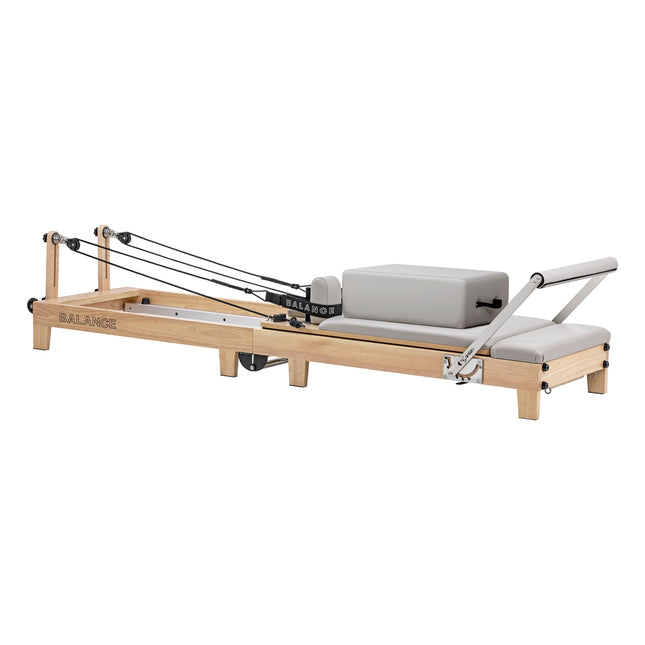
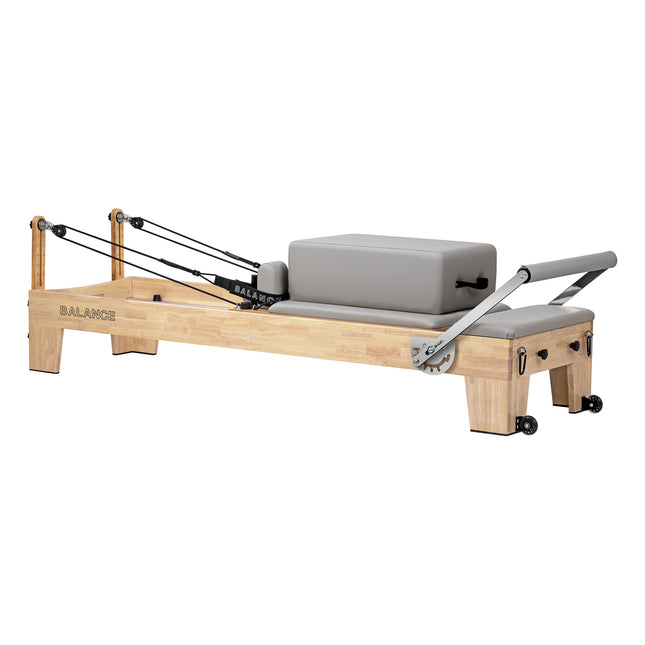
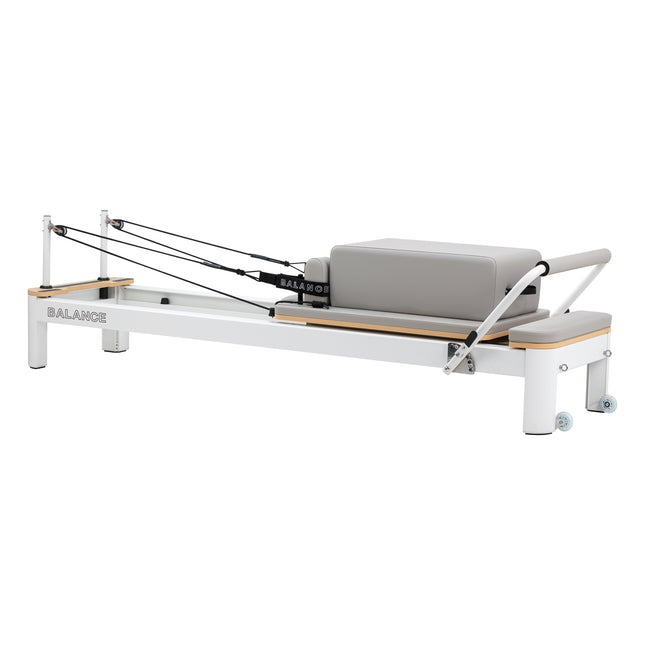
A Pilates reformer uses a carriage that moves along the frame. Springs provide resistance, while the footbar, cables and handles allow different positions and movement patterns. The settings let you adapt an exercise to your level and the session’s goal. Rosa, Calma and Lumina each offer their own combination of springs, attachment points and footbar positions.
A Pilates Cadillac uses a fixed bench with a frame, springs, bars and straps. On the One, you can work lying down, sitting, kneeling or standing; the trapeze adds options for support and suspension exercises. This construction is useful when you specifically want the fixed bench and overhead frame as your starting point.
Compare the four models
| Model | Construction | A feature to guide your choice |
|---|---|---|
| Balance One | Cadillac with wooden base and fixed bench | Trapeze, springs, bars and straps for different exercise setups. |
| Balance Rosa | Folding wooden reformer | 5 springs; folds in half, stores upright and moves on wheels. |
| Balance Calma | Wooden reformer | 6 springs, 3 rows of spring attachments and 8 footbar positions. |
| Balance Lumina | Aluminium reformer | 6 springs, 2 rows of spring attachments and 6 footbar positions. |
Choose settings that suit your exercises
For reformers, spring count is one part of the decision. Rosa has five springs: three red, one blue and one yellow. Calma and Lumina have six springs: two of each colour. Red indicates high resistance, blue medium resistance and yellow light resistance. Attachment positions and adjustment options also determine how you can configure the machine.
All three reformers have a headrest with three heights. The footbar offers seven angle positions on Rosa, eight on Calma and six on Lumina. Compare these components together so the equipment suits the exercise forms you want to include in your programme.
Consider accessories and comfort too
Rosa, Calma and Lumina include a box and jumpboard, together with springs and a cable and pulley system, among other components. These let you introduce additional exercise variations. The reformers have grey upholstery and a high-density EVA foam mattress. The One has a broad padded bench and its own set, including springs, straps and a rolling bar.
Visit each product page for the full set contents, adjustment details and dimension photographs. This helps you plan the training space around the actual equipment configuration.
A focused choice for your training space
Choose Rosa when folding and upright storage matter. Calma combines a wooden frame with six springs and eight footbar positions. Lumina provides an aluminium frame with six springs. Choose One when you want to work with a fixed bench and trapeze. Let your preferred exercise setup and the way you use the room guide the final choice together.


